
A Complete Guide to Choosing the Right Resin

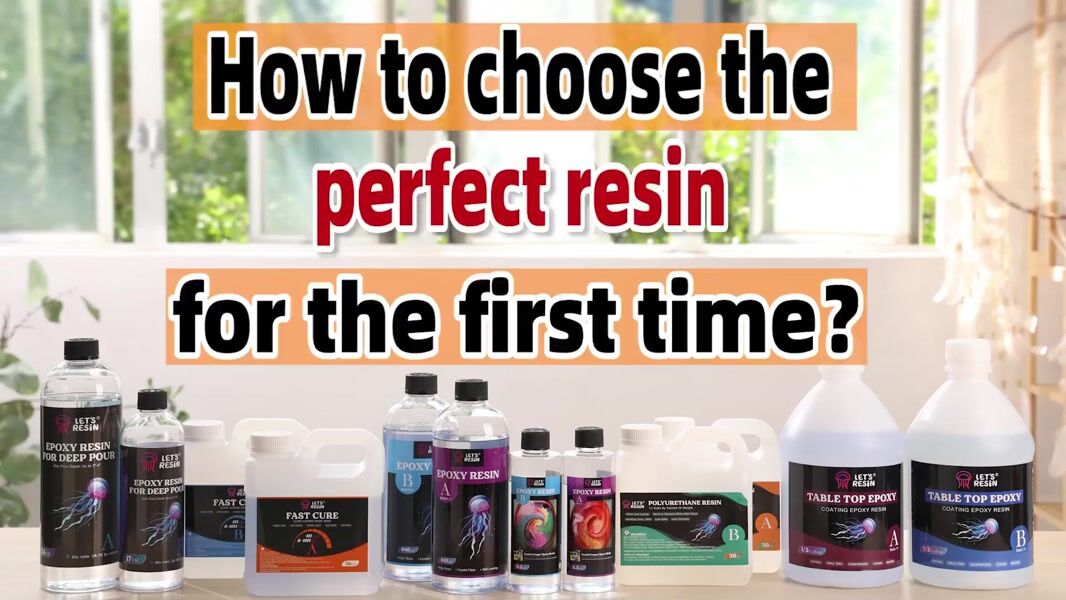
 Are you an enthusiastic beginner eager to step into the world of resin art? Feeling overwhelmed by the variety of epoxy resins and not sure where to start?
No worries! This tutorial is tailored for beginners, teaching you how to distinguish types of epoxy resins from the ground up. From choosing the right resin to getting hands-on, we’ll guide you to take your first steps into resin creation with ease!
 Epoxy Resin Types and Differences


 Epoxy resin consists of two parts: Part A (resin) and Part B (hardener). When you mix these two components in the correct ratio, the mixture will gradually heat up. This heat triggers a chemical reaction that transforms the epoxy from liquid to solid. It's an extremely popular choice for DIY crafts, allowing you to create any shape or effect you desire—such as jewelry, necklaces, home decor, wall art, and more.
The four most common types of resin available on the market are:
- Regular Epoxy Resin
- Deep Pour Resin
- Fast Cure Resin
- PolyurethaneResin
They differ mainly in four operational aspects:
- Suitable application
- Compatible thickness
- Curing time
- Working time
The most critical factor is the suitable application. You can choose the right epoxy resin based on the effect and application you want for your project.
 Now let's take a quick look at the differences among them.
I.Epoxy Resin(Regular Epoxy Resin)
Application: For bookmarks, Jewelry, Decorations, Jars, Casting molds, etc.
Thickness: 1 inch
Curing Time: 8~24 hours (The curing time will extend in winter)
Working Time: 40 minutes
Advantages and Limitations:
It is cost-effective and widely applicable, making it the top choice for most resin users. However, it is not well-suited for casting very thick layers, as this can lead to flash cure. However, thicker pieces can still be achieved by pouring the resin into layers.


II. Deep Pour Resin
Application: For river tables and deep art projects
Thickness: 2~4 inches
Curing Time: 48~72 hours (The curing time will be longer than other resins.)
Working Time: 80 minutes (It needs sufficient crafting time.)
Advantages and Limitations:
Deep pour resin is prone to curing shrinkage during the curing process. Compared to other deep pour resins on the market, our deep pour resin minimizes shrinkage while offering excellent support and scratch resistance.
It should be noted that deep pour resins generally require a longer curing time compared to regular epoxy resins. They are also not suitable for crafting thinner items, as this will extend the curing time.


III. Fast Cure Resin
Application: For small crafts, jewelry, and bookmarks
Thickness: 1 inch
Curing Time: 4~10 hours (It's very suitable for winter.)
Working Time: 20 minutes (It takes a shorter working time.)
Advantages and Limitations:
It significantly reduces the waiting time for curing, making it ideal for meeting tight production deadlines. However, its rapid curing speed is not suitable for projects that require longer working time, nor is it recommended for thick pours due to the risk of bubble formation.


IV. PolyurethaneResin
Application: For prototype models, sculptures, and casting molds
Thickness: Not required
Curing Time: 10 minutes
Working Time: 2 minutes
Advantages and Limitations:
This resin enables rapid project completion by shortening the curing time. Its excellent fluidity makes it ideal for pouring into silicone molds.
It's kindly noted that it cures an opaque, white finish, making it unsuitable for transparent or translucent projects. Additionally, due to its short crafting time, please pay attention to time management during the process.

