
[Efficiency Enhancement Tools]Different types of UV lights

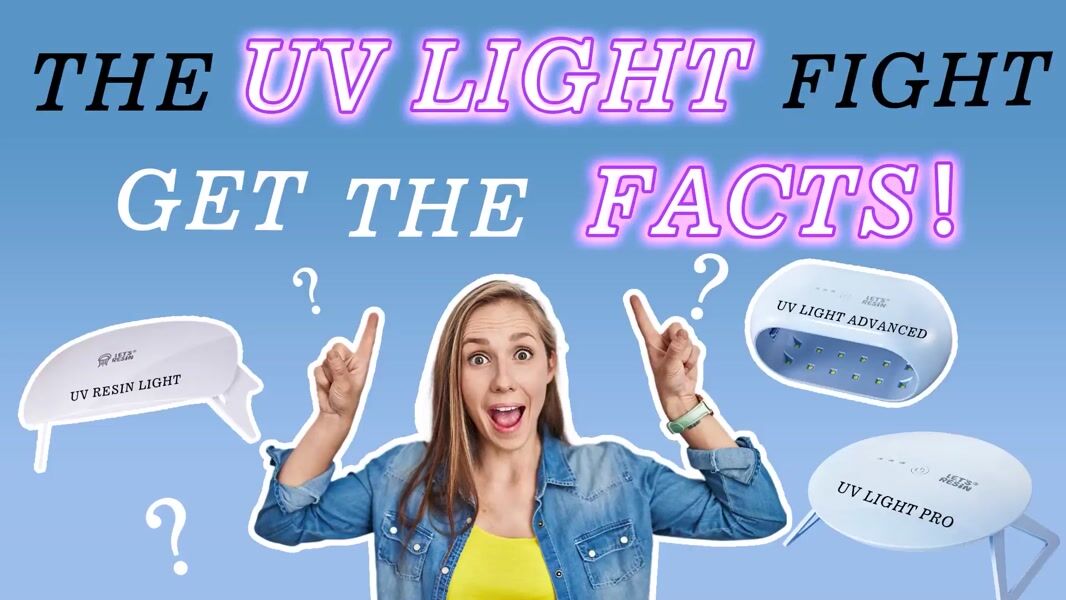
 Do you want to play with UV resin but don't know which UV light to choose? Don’t worry! This UV resin light guide will help you quickly understand the differences!
 Specially designed to enhance your crafting experience! Simple operation, quick curing, and perfect for creating UV resin items such as earrings, keychains, and coasters. Make your creations more professional and fun!
 What are the advantages and limitations of different UV lights?
| Feature | White UV Light | Mini UV Light | Round UV Light | Double-sided UV Light | Wireless UV Lighr | UV flashlight |
|---|---|---|---|---|---|---|
| Feature | Extra-long USB cable (150 cm/59inches) | Ultra-portable | Large coverage | Double-sided curing, detachable into two lamps | Rechargeable, adjustable height, wireless | Rechargeable,Handheld, flexible operat |
| Time Settings | 60s / 120s | 60s / 120s | 2 / 3 / 5 min | 2 / 3 / 5 min | 2 / 3 / 5 / 20 min | Auto-off after 8 minutes |
| Number of Lamp Beads | 18 pieces | 6 pieces | 20 pieces | 36 pieces (18 each on top and bottom) | 18 pieces | Single point highlight |
| Recommended Use | Daily DIY | Travel portability / Getting Started | Mold batch curing | Professional users / Efficient studio use | Outdoor / Coating / Bonding | Bonding / Spot cleaning |
White UV Light
Advantages
The medium model among all UV lamps, affordable, extra-long USB cable (59in), more flexible to use, meeting regular curing needs.
Limitations
One-sided irradiation, needs to flip over, only 18 beads, moderate coverage, not suitable for large molds or batch operations.

Mini UV Light
Advantages
It weighs only 84g, is light and portable, folds compactly, takes up little space, and is very suitable for carrying around. It is easy to operate and suitable for novice/entry-level players.
Limitations
Only 6 beads, weaker curing ability, slower curing speed, limited curing area, not suitable for larger molds or complex processes.


Round UV Light
Advantages
It has up to 20 lamp beads, covering a wide irradiation area and ensuring more uniform curing. It provides multiple time settings (2/3/5 minutes) to meet the needs of different resin thicknesses. The panel is large and has a circular design, which allows for more concentrated light and is suitable for batch curing of multiple pieces.
Limitations
It does not support double-sided curing and needs to be manually turned over when in use.

Double-sided UV Light
Advantages
Double-sided irradiation, with a total of 36 light beads, provides fast curing speed and extremely high efficiency, without the need to flip the finished product. The UV light can also be split into two single-sided lights for independent use, flexible and versatile, specially designed for medium and large molds, suitable for curing thick layers/three-dimensional structures; multiple time settings are provided for easy control.
Limitations
Larger size, lower portability.

Wireless UV Light
Advantages
Wireless, rechargeable, no cables, flexible usage scenarios; built-in 4400mAh large battery, long battery life; adjustable height to meet different mold and angle requirements, as well as handheld UV resin bonding work; supports a maximum of 20 minutes of timer, reducing frequent operation.
Limitations
Relatively high price, heavier than standard lamps, moderate portability.

UV Flashlight
Advantages
Handheld, flexible operation, ideal for spot lighting and corner repairs; portable, easy to use; fast curing speed, perfect for thin layers.
Limitations
Small irradiation area, not suitable for large area curing.

 Tools and Materials Preparation
Materials: Regular UV resin
Tools: Measuring Cup, Mixing stick, UV Lamp, 75% Alcohol (for Cleaning), Transparent Mold Protective Equipment: Always wear respirator, nitrile waterproof gloves, a waterproof apron for safe handling.
 Environment Setup
Ideal Conditions: Maintain a temperature between 73–78°F with humidity no higher than 50–60% RH.
Ventilation: Work in a well-ventilated area, ideally near a window or use an air purifier for better airflow.

| Step | Making Process |
|---|---|
| 1.Pouring Resin | Slowly pour the UV resin into your mold. Take your time, pouring too quickly can cause bubbles to form. |
| 2.Choosing the Right UV Light | Select the appropriate UV light based on the project (standard, wireless, double-sided, etc.). |
| 3.Setting the Curing Time | Adjust curing time according to the thickness of your resin. As a general rule, curing usually takes 2–5 minutes. |
| 4.Checking the Cure | Use a toothpick to gently press the surface and bottom.If it feels sticky, flip the piece over and cure for another 30–60 seconds.If the center is still soft, cure for an extra 2–3 minutes. |
| 5.Demolding & Finishing Touches | Once the resin has cooled completely, carefully remove it from the mold. If there are any rough edges, smooth them with fine sandpaper or apply a thin coat of resin for a glossy, polished finish. |


 Common usage issues

